
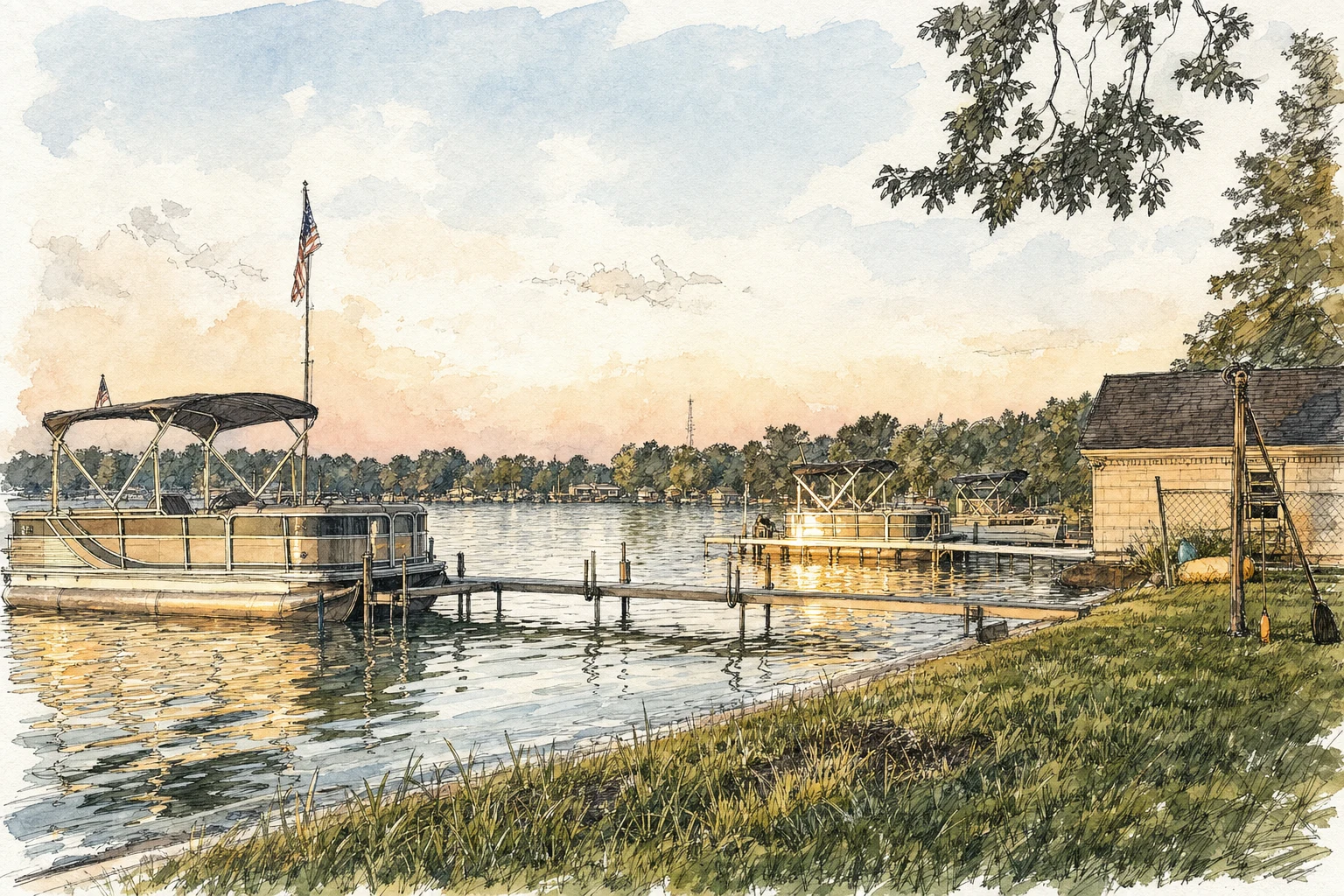
You can usually tell, within ten minutes of being on a lake, what kind of homeowner you’re about to become.
Some lakes whisper. Gun Lake has a pulse. On the right summer weekend it can feel like half of West Michigan has the same idea: get on the water, meet friends, tow something behind the boat, and make the day long on purpose. And then, two months later, it can deliver the exact opposite experience: a quiet shoreline, cold clear air, and the kind of stillness that makes you realize how much noise you live with the rest of the year.
That swing is the whole point, but it’s also why buying a home on Gun Lake is not just about “waterfront.” It’s about choosing the version of Gun Lake you want to live with, then matching the home, shoreline, utilities, and access to that version.
First: what kind of lake day are you buying?
Gun Lake is big enough, active enough, and varied enough that two owners can describe it like they live on different lakes. In a Michigan DNR fishery resource report (surveyed in 1989, published in 1991 and later renumbered), the lake is described as being separated into an east and west basin that differ significantly in depth and structure. The west basin is noted as being almost uniformly shallow, while the east basin reaches a reported maximum depth of 68 feet. The same report references multiple public launches and a significant amount of state-owned shoreline tied to Yankee Springs Recreation Area. That physical layout is not trivia. It’s a lifestyle map. It influences boat traffic patterns, views, weed growth, dock planning, and even winter shoreline stress.
So before you fall in love with a listing photo of a sunset, decide which of these you want most days:
- Action-forward boating: quicker access to open water, more exposure to wake and traffic, and a “summer is happening” atmosphere.
- Protected water: more calm water days, easier paddling, and sometimes a bit more buffer from the busiest routes.
- View-first shoreline: wider, more dramatic sightlines and that classic “I can see half the lake” feeling, often paired with more exposure.
- Low-maintenance access to the lake: not always true waterfront, sometimes a deeded access, shared frontage, or a canal situation that trades the big view for less work and often a different price point.
There’s no universally “best” choice. But there is definitely a right match for how you actually want to use the lake, and how much lake-management you want to do.
Gun Lake’s not-so-obvious feature: you’re also buying a recreation area next door
One reason Gun Lake works so well as a lifestyle purchase is that the lake is closely tied to Yankee Springs Recreation Area. The Michigan DNR’s current park page spells out what that means in practical, do-this-tomorrow terms: a beach house in the Gun Lake day-use area with restrooms, food concessions, and paddlesport rentals, buoyed swim areas, and boating access across multiple lakes in the recreation area. It also outlines camping options, including the Gun Lake modern campground (200 sites) and other rustic facilities, plus trail and winter-use activities.
Translation for homeowners: you are not just buying private lake life. You are buying proximity to a public lake lifestyle ecosystem that includes beaches, launches, and trails. For some buyers, that is a huge plus. For others, it’s a reminder to be very intentional about where on the lake you buy and what kind of weekend energy you want outside your windows.
What owning waterfront here can feel like (and what it demands)
When people say they want “waterfront,” they often mean three different things without realizing it:
- Water access: the ability to keep a boat, kayak, or paddleboard ready to go.
- Water presence: the view, the sound, the light, the breeze.
- Water identity: the social and recreational lifestyle that comes with being “on the lake.”
Gun Lake delivers all three, but it asks for more homeowner competence than a smaller, quieter lake might. Here are the ownership realities that matter when you move from “looking” to “offering.”
1) Shoreline work is not optional, it’s just deferred maintenance with better marketing photos
Bulkheads, seawalls, riprap, steps, retaining walls, and shoreline landscaping all live in a hard environment: wave action, freeze-thaw cycles, fluctuating water levels, and constant moisture. The DNR report notes areas of bulkheads and seawalls along developed shoreline, which is common on highly developed lakes. That’s a hint: you should treat shoreline structures like a roof. You don’t want surprises, and you don’t want to inherit someone else’s “temporary fix.”
On a Gun Lake purchase, a smart due diligence plan usually includes:
- Careful review of seawall condition and tie-backs where applicable.
- Dock condition, configuration, and what stays with the home (and what the seller removes).
- Evidence of erosion control measures, especially where the lot has slope down to the water.
- Any prior permits or documentation for shoreline work if the seller has them.
Permitting and rules can vary by shoreline type and scope of work, so the right move is to investigate early rather than assume a future plan is simple.
2) “Which side of the lake?” is a real estate question, not a small-talk question
Gun Lake’s basin layout and varying depth profile, as described by the DNR fishery report, is a reminder that the lake is not uniform. Certain areas can be more shallow, more vegetation-prone, or more exposed to traffic. Some shorelines read as classic “cottage legacy.” Others read more like year-round homes with significant investment.
When you’re house-hunting, don’t just compare bedrooms and frontage. Compare:
- Morning water conditions where the house sits (calm paddling versus immediate wake exposure).
- Afternoon and weekend patterns (how the busiest times interact with your shoreline).
- Sun angle on your deck and main living spaces (a huge quality-of-life factor that photos don’t always show).
- Lot shape and elevation (flat lawn-to-lake is a very different ownership experience than stairs and slope).
3) Utilities are part of the lake decision, not an afterthought
Gun Lake is served in many areas by a sewer authority, and that’s a meaningful difference between lakes where septic is the default. The Gun Lake Area Sewer & Water Authority explains in its FAQs that many customers are billed on a flat rate per unit (with one unit described as a single-family home), and it also addresses the reality that people with seasonal use still pay because of fixed system costs. The authority also notes the location of its wastewater treatment plant on the south side of Gun Lake.
From a buyer’s perspective, this creates two important practical steps:
- Confirm service: Is the specific property connected to sewer, and if so, what system type applies?
- Confirm obligations: Any required equipment (for example, certain pump systems) and any transfer or inspection requirements tied to the system.
Even when a property is connected to public sewer, it doesn’t automatically mean public water. Verify both independently.
A very plausible Saturday on Gun Lake (and why it matters for your home search)
If you’re relocating, the easiest way to buy the right property is to picture a normal day, not a vacation day.
On Gun Lake, a realistic “this is my life now” Saturday might look like this:
- Morning: a walk or quick trail loop nearby, then back home to get the dock set up for the day.
- Late morning to afternoon: out on the lake. Maybe you’re towing, maybe you’re cruising, maybe you’re the “anchor and talk for three hours” person.
- Mid-afternoon: a break that is not complicated. This is where proximity to Yankee Springs Recreation Area becomes tangible. The DNR notes the Gun Lake day-use area has a beach house with restrooms, concessions, and paddlesport rentals, plus buoyed swim areas. That kind of infrastructure changes how easy it is to host friends, entertain kids or guests, or just reset your day without turning your house into the public restroom plan.
- Evening: dinner close to the lake. Bay Pointe Inn, on the south shore in Shelbyville, positions itself as a lakefront resort with dining (Bay Pointe Bar & Grille) and year-round operations. Even if you’re not the “resort dinner” type every week, having a reliable nearby option can be a quality-of-life multiplier on lake weekends.
Now, here’s the real estate point: the home you choose either makes that day feel effortless, or it makes it feel like work.
Examples of “effortless” design and site traits on an active lake often include: good lake-side storage, a sensible path from kitchen to deck to dock, shoreline that can handle traffic without constant repair, and enough parking and turnaround space that guests don’t become a logistics problem.
What Gun Lake tends to reward (and what it punishes)
Every lake rewards a certain style of buyer and punishes a certain style of assumption.
Gun Lake rewards:
- Buyers who want the lake to be a central hobby, not an occasional view.
- People who enjoy seasonal contrast: summer boating, fall quiet, winter stillness, spring ramp-up.
- Owners who like having public amenities nearby (day-use areas, launches, trails) even if they don’t personally use them every day.
Gun Lake punishes:
- “It’s just like any other waterfront” thinking. The basin differences, exposure, and activity level can create very different ownership experiences around the same lake.
- Underestimating shoreline maintenance. If you buy a shoreline problem, you usually don’t get to ignore it for long.
- Not verifying utilities. Sewer, water, and any property-specific system requirements should be confirmed early.
Beyond the lake: what’s nearby when you want to do something else?
A strong second-home or primary-home lake purchase usually needs one more ingredient: something to do when you’re not on the water.
Within the broader area, a few anchors worth knowing about (and verifying for your own schedule and interests):
- Gun Lake Casino Resort in Wayland, with on-site dining and entertainment options listed through its official site and destination listings.
- Gilmore Car Museum in Hickory Corners, which publishes visitor information and open dates on its official website. It’s the kind of nearby destination that turns a “we’re just at the lake” weekend into a “we did something memorable” weekend without a long travel commitment.
Considering Gun Lake versus other West Michigan waterfront styles?
If you’re cross-shopping, here’s a helpful framing question: Do you want your waterfront to feel like a neighborhood-with-water, or like a recreation-forward lake culture?
Gun Lake leans hard into the recreation-forward side of the spectrum. That’s why people love it. It’s also why choosing the right shoreline position matters so much.
A practical next step if you’re thinking about buying on Gun Lake
If you’re relocating or buying a second home, send me two things: (1) your price range, and (2) a short description of your ideal lake day. Then we can narrow your search to the parts of Gun Lake that actually fit your lifestyle, and build a due diligence plan that matches the shoreline and the utilities of the specific home you’re considering.
If you already have a property in mind, send me the address. I’ll tell you what deserves a closer look before you write an offer.
For more West Michigan lifestyle and relocation guidance, start here: Switek Relocation Hub.