
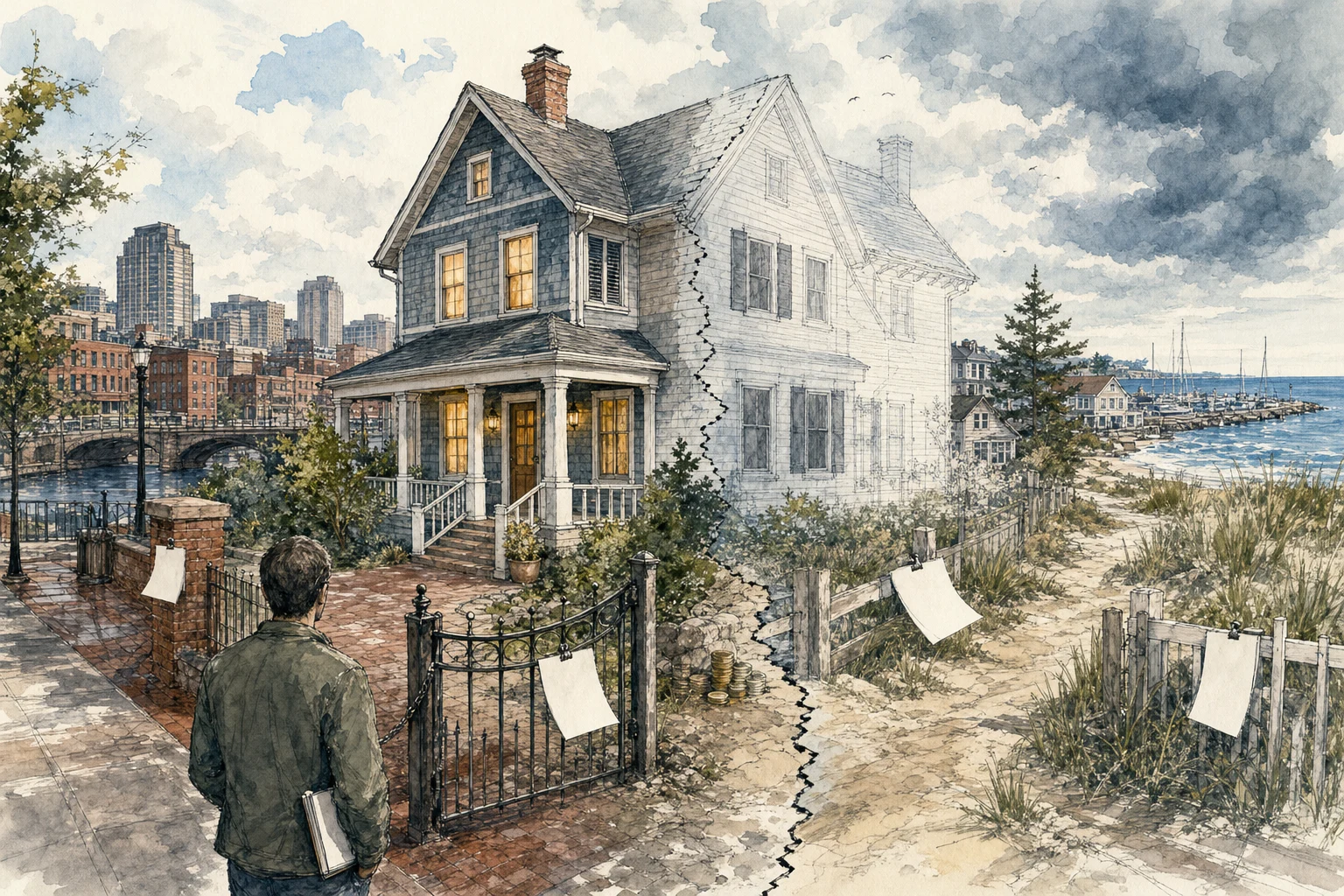
The most expensive phrase in West Michigan real estate might be three harmless words in an online listing: “Airbnb potential.”
Sometimes it means exactly what you hope. Other times it means the property can only be rented short-term under an owner-occupied, one-room rule, or it means there is a license cap and the waitlist is real, or it means the “right to rent” does not transfer with the deed. The result is the same: you can buy a perfectly good house that cannot legally do the one job you bought it for.
This draft is a practical due diligence map for 2026, with a West Michigan emphasis. The goal is not to talk you into short-term rentals. It’s to help you verify, early, whether a specific address can actually be operated as one.
Quick takeaways
- In some cities, a whole-home short-term rental is simply not permitted. Grand Rapids, for example, broadly states that renting property for less than 30 days is not permitted, while separately licensing a narrow “one-room rental” for owner-occupied homes.
- Licenses are often capped, geographically restricted, and sometimes non-transferable. Holland and Saugatuck both publish STR frameworks that can limit where and how many rentals exist, and whether the approval survives a sale.
- Your tax stack is not just “whatever Airbnb collects.” Michigan’s 6% use tax is a baseline for stays of 30 days or less, and Kent County levies an 8% hotel/motel tax on stays under 30 days. You have to verify what applies to your address and booking channel.
Start with the harsh question: is a whole-home STR even allowed at this address?
Before you price a property like a business, confirm the business is allowed. In West Michigan, “short-term rental legality” is not a county-wide rule. It is usually a city, village, or township question, and sometimes a specific zoning district question inside that jurisdiction.
Grand Rapids: a common misunderstanding
Inside the City of Grand Rapids, the City’s Neighborhood Living Guide states plainly: renting property for less than 30 days (i.e. short-term rental) is not permitted. City of Grand Rapids Neighborhood Living Guide (2025).
At the same time, Grand Rapids also has a defined, narrow licensing path for an owner-occupied “one-room rental” (a single room, couch, or other sleeping area) with a maximum of two adult guests overnight. The City’s checklist also notes a cap of 200 licenses per licensing year, and it requires the license number to appear in advertising. City of Grand Rapids One-Room Rental Checklist (PDF).
Translation: if you are underwriting a non-owner-occupied, entire-home STR in Grand Rapids city limits, you should assume “Airbnb potential” is a marketing phrase until you confirm there is a legal route for the exact use you want. If you are aiming for an owner-occupied, one-room setup, you still need to verify licensing, inspection, and operating rules. City of Grand Rapids: Apply for Home Occupation Licenses.
Permits and caps: the “right to rent” may not come with the keys
In short-term rental discussions, buyers often talk as if the property itself “is” or “is not” an STR. In practice, many places treat short-term rental operation as a permission that can be constrained by:
- a zoning district where STRs are allowed,
- a separation distance from other STRs,
- a cap on the number of licenses in a city or district,
- owner-occupied vs. non-owner-occupied rules,
- and sometimes a rule that the license does not transfer when ownership changes.
Holland: published rules, and a very real “no openings” problem
The City of Holland publishes a short-term rental framework that distinguishes owner-occupied STRs from investor-owned STRs (non-owner-occupied). It states owner-occupied STRs are allowed in any zoning district, but investor-owned STRs are limited to specific districts or, in certain residential districts, subject to a maximum number of properties and a separation distance. It also notes that there are currently not any openings for that capped residential pathway. City of Holland Rental Certification & Licensing Guide.
If you are buying in Holland based on STR income, your offer-stage question is not “are STRs allowed in Holland?” It’s: Is this exact address eligible today, and is there capacity under the cap?
Saugatuck: licensing, caps, and non-transferability called out in plain English
Saugatuck is unusually direct on its public STR page: STRs require an annual license and inspection, ads must include the license number, and the City publishes caps by zoning district. The page also warns that STR certificates and licenses are generally non-transferable and can become void upon an attempted transfer of ownership, with limited exceptions requiring prior City approval. City of Saugatuck Short-Term Rentals.
The underlying ordinance structure is also published, including a requirement that a person obtain a license to operate. City of Saugatuck Code of Ordinances, Chapter 99.5 (Short-Term Rentals).
From a real estate strategy standpoint, “non-transferable” changes everything. You are no longer buying an operating STR. You are buying a property that might qualify to apply for an STR license after closing, subject to caps and approvals.
Inspections and safety: plan for time, not just money
Short-term rentals tend to trigger the kind of scrutiny that long-term rentals sometimes avoid until a complaint forces the issue. Even where STRs are allowed, licensing often pulls in:
- fire inspections,
- smoke and CO detector standards,
- egress expectations,
- handrails, bedroom definitions, and occupancy limits,
- and sometimes parking, trash, and signage requirements.
For example, Saugatuck’s application process describes fire department inspection scheduling and reinspection fees. City of Saugatuck Short-Term Rentals. Grand Rapids’ one-room rental checklist also references a fire inspection as part of the licensing process. City of Grand Rapids One-Room Rental Checklist (PDF).
Practical implication for buyers: do not assume you can close in 30 days and “turn it on” next weekend. Even if the property is physically fine, the process may have timelines, application windows, and inspection scheduling.
Taxes: Michigan is 6%, and Kent County is 8% on top of that
Short-term rental underwriting often collapses taxes into one line item called “Airbnb taxes.” That’s how people get surprised.
Michigan’s statewide 6% use tax applies to stays of 30 days or less
Michigan’s Department of Treasury explains that use tax applies to certain services including hotel and motel accommodations, and it provides registration and guidance links for sales and use tax. Michigan Department of Treasury: Sales and Use Taxes.
Treasury has also specifically addressed the “sharing economy,” stating that Michigan’s 6% use tax applies to stays of 30 days or less, including vacation homes and rooms in private residences. Michigan Treasury: Tax Implications of the Sharing Economy (Feb 2016 PDF).
For readers who like exact definitions, Treasury’s materials also clarify that “one month” is treated as 30 days or the calendar month of the rental period, whichever is shorter, in the context of room and lodging rentals. Michigan Department of Treasury: Other Deduction Manual (April 2026), Chapter 31.
Kent County’s 8% hotel/motel tax (effective January 1, 2025)
If your STR is in Kent County, you also need to understand the lodging excise tax. Kent County states that its hotel/motel tax is levied at a rate of 8% and that the increase from 5% to 8% became effective January 1, 2025, applying to stays of less than 30 consecutive days. Kent County: Hotel / Motel Tax.
The authority for local accommodations excise taxes is based in Michigan’s accommodations tax enabling act. Michigan Legislature: Public Act 263 of 1974 (Accommodations Tax Act).
Does the platform collect and remit it for you? Sometimes. Verify.
Airbnb publishes a Michigan-specific help article describing taxes it collects from guests in Michigan, including the 6% use tax and (for Kent County) an 8% hotel-motel tax for shorter stays. Airbnb Help: Occupancy tax collection and remittance by Airbnb in Michigan.
Two important cautions:
- Different platforms handle taxes differently. Do not assume a Vrbo booking, a direct booking, and an Airbnb booking produce identical tax handling.
- Even if a platform collects some taxes, you may still have registration and reporting obligations depending on how you operate and where the property is located. Confirm with Treasury and your tax professional for your specific setup.
Condo bylaws and HOAs: the fastest “no” in the whole process
Even when zoning allows a short-term rental, private restrictions can shut it down. Condominiums and HOAs can restrict leasing terms, require association approval, impose guest rules, or prohibit rentals under a minimum number of days.
This is not theoretical in Grand Rapids. The City’s one-room rental checklist explicitly calls for a letter of approval from an authorized condominium association if applicable. City of Grand Rapids One-Room Rental Checklist (PDF).
Deal tip: if the property is a condo, treat STR feasibility like financing. If you cannot get the documents and a clear answer quickly, you do not have a “maybe.” You have a risk.
The offer-stage STR checklist (the “closing-safe” version)
If you are buying a property based on STR income, the cleanest time to protect yourself is before you waive contingencies. Here is the checklist I want clients to walk through early, ideally before writing or during inspection due diligence.
1) Jurisdiction and zoning reality
- Is the property in a city, village, or township, and which one actually has authority for zoning and rental rules?
- What zoning district is it in, and does that district allow the specific STR use you want (owner-occupied room rental vs. whole-home vs. B&B)?
- Is the city’s rule effectively “not permitted,” like Grand Rapids states in its Neighborhood Living Guide for rentals under 30 days? City of Grand Rapids Neighborhood Living Guide (2025).
2) License availability and transferability
- Is there a cap (citywide or by district)?
- Is there a separation distance requirement?
- Is there an open slot today, or is it closed like Holland notes for some non-owner-occupied residential openings? City of Holland Rental Certification & Licensing Guide.
- Does the license transfer with sale, or does it generally die at closing, as Saugatuck warns? City of Saugatuck Short-Term Rentals.
3) Inspection pathway and compliance budget
- What inspections are required (fire, building, rental certification, local property maintenance)?
- Are there published fees and reinspection fees (Saugatuck provides examples)? City of Saugatuck Short-Term Rentals.
- What items tend to be non-negotiable for approval (life safety items usually are)?
4) Operating rules that impact revenue
- Occupancy limits, bedroom definitions, parking limits, visitor limits, quiet hours, trash requirements, and local agent requirements.
- Advertising requirements like displaying a license number (Grand Rapids and Saugatuck both call this out). Grand Rapids One-Room Rental Checklist and Saugatuck STR page.
5) Taxes and who collects them
- Michigan 6% use tax on stays 30 days or less. Michigan Treasury sharing economy PDF.
- Kent County’s 8% hotel/motel tax if applicable. Kent County Hotel / Motel Tax.
- Confirm whether your booking channel collects and remits, and what remains your responsibility. Airbnb Michigan tax help article.
6) HOA and condo documents
- Master deed, bylaws, rules, and any rental amendments.
- Written confirmation of whether STRs are permitted and, if required, what approvals are needed.
Selling a property that has been used as an STR: how to keep it from getting weird
If you are selling a property that has been operated as a short-term rental, your best move is to reduce ambiguity. Ambiguity is where deals die or get discounted.
- Separate marketing from legality. “Proven Airbnb income” can be true and still irrelevant if the next buyer cannot legally operate the same way.
- Package what you can document. Licenses, inspection sign-offs, correspondence with the municipality, and any platform tax collection summaries you can legally share (without implying guaranteed future performance) help an appraiser, an underwriter, and a cautious buyer feel the ground under their feet.
- Be careful with transfer assumptions. If the license is not transferable or is capped, say so plainly and price accordingly.
The bottom line
In West Michigan, short-term rentals are not one market. They’re hundreds of micro-markets governed by local rules, plus a tax layer, plus whatever your HOA thinks about weekend guests.
If you’re considering buying, selling, or repositioning a property based on STR use, the smartest first step is not running a revenue calculator. It’s verifying permission: zoning, licensing, caps, transferability, inspection requirements, and the tax stack for that exact address.
If you want a second set of eyes before you write an offer, I’m happy to help you map the address, identify the correct jurisdiction, and build an offer strategy that matches the real rules, not the listing copy.